Standing at the counter wondering which steak to choose? Every cut comes from a different part of the animal, and that decides how tender it is, how much flavour it has, and how best to cook it. Here's a butcher's guide.
The premium steaks
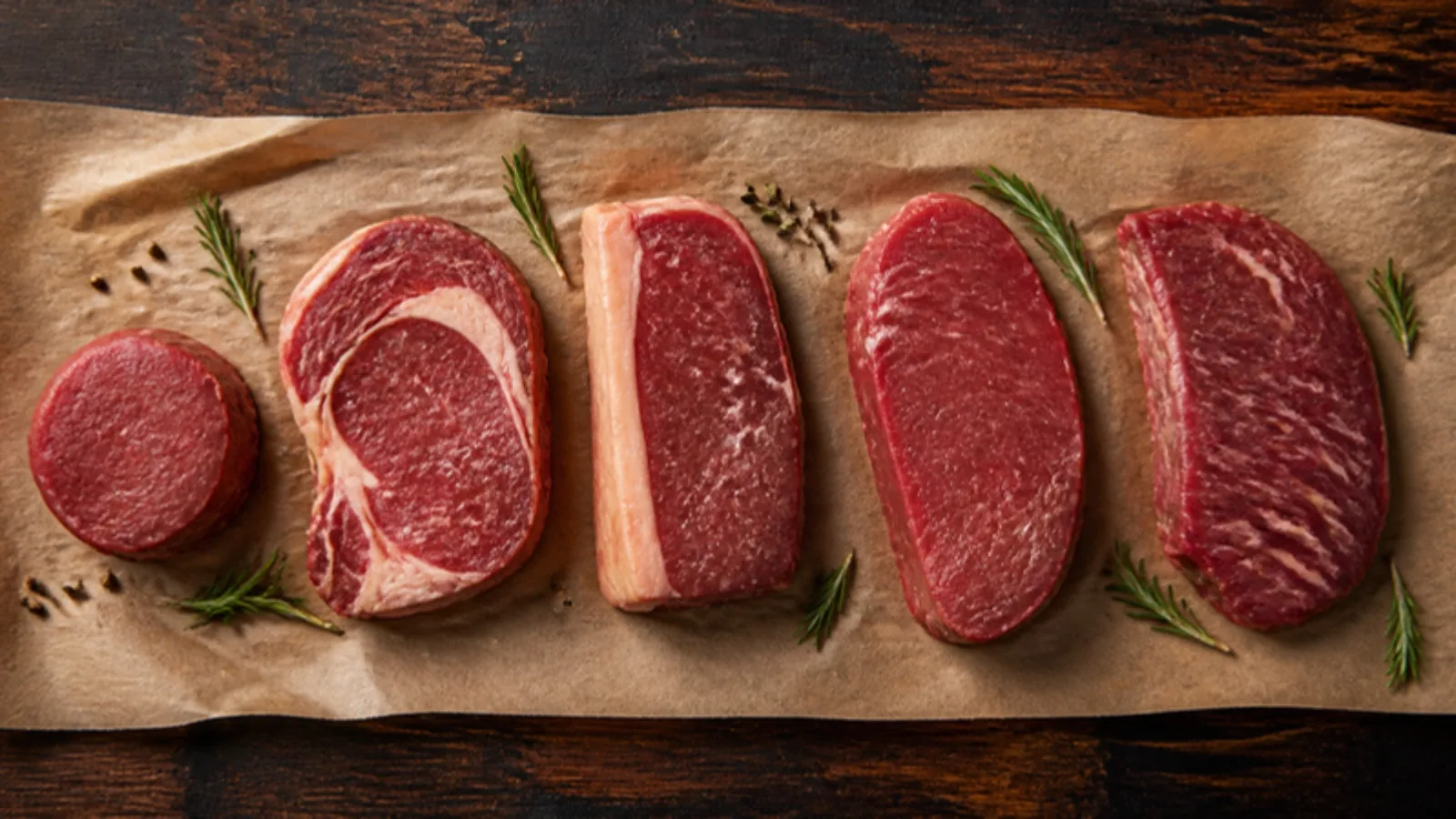
Fillet. From under the backbone, a muscle that does almost no work, so it's the most tender steak of all. Lean and mild, with a soft, buttery texture. Best rare to medium-rare. Also the cut for beef Wellington and chateaubriand.
Ribeye. From the rib. Well marbled, with a pocket of fat in the middle that melts as it cooks. Rich, juicy and very forgiving. Many butchers' favourite steak. On the bone, it's sold as a côte de boeuf or tomahawk, made for sharing.
Sirloin. From the back, behind the ribs. A good balance of tenderness and flavour, with a strip of fat along one edge. Firmer than ribeye and leaner too. On the bone with a piece of fillet attached, it becomes a T-bone or porterhouse.
The flavour steaks
Rump. From the top of the hindquarter. Leaner and a little firmer, with a big beefy flavour and great value. Don't cook it past medium, and slice it against the grain.
Flat iron. From the shoulder, and a butcher's secret: once trimmed of its central sinew it's surprisingly tender, well marbled and good value. Cook it quickly and hot, then slice it.
Onglet (hanger) and bavette (flank). Loose-textured, deeply flavoured steaks, popular in French bistros. Marinate them if you like, cook hot and fast to rare or medium-rare, rest, and slice thinly against the grain.
Picanha. The rump cap, with its thick fat layer left on. Popular in Brazil, cooked whole on a grill or sliced into steaks.
Quick comparison
| Cut | Tenderness | Flavour | Price |
|---|---|---|---|
| Fillet | ★★★★★ | ★★ | £££££ |
| Ribeye | ★★★★ | ★★★★★ | ££££ |
| Sirloin | ★★★★ | ★★★★ | ££££ |
| Rump | ★★★ | ★★★★ | ££ |
| Flat iron | ★★★★ | ★★★★ | ££ |
| Onglet / bavette | ★★★ | ★★★★★ | ££ |
How to choose
- Special occasion, mild flavour: fillet.
- Most flavour, most forgiving: ribeye.
- Classic all-rounder: sirloin.
- Weeknight value: rump or flat iron.
- Something different: onglet or bavette.
Look for meat that's deep red rather than bright, with fine streaks of fat through the muscle (marbling). That fat is flavour. Properly matured beef also makes a big difference: here's why dry-aged beef tastes better.
Ask your butcher
The best thing about buying steak from a butcher is that you can ask. We'll tell you what's best this week, cut it to your preferred thickness, and tell you how to cook it. When you're ready, read our guide to cooking the perfect steak, then order your steaks.