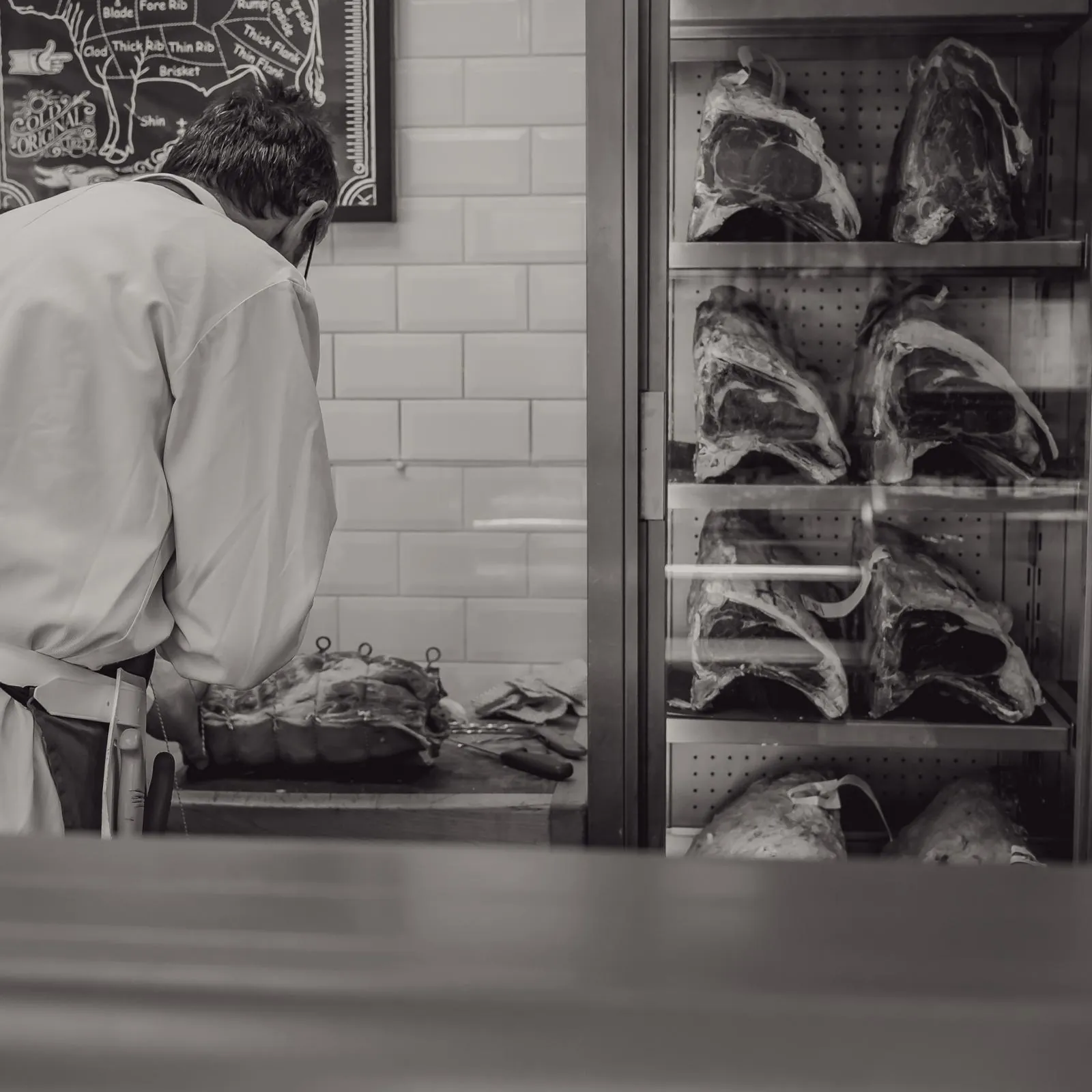
You'll see "dry-aged" or "matured for 28 days" on steaks in good butchers and restaurants. Here's what it actually means, and why it makes such a difference to the beef on your plate.
What is dry-ageing?
After slaughter, beef is hung, uncovered, in a chilled room with controlled temperature, humidity and airflow, typically for three to five weeks, and sometimes much longer. Two things happen while it hangs:
- It becomes more tender. The beef's own natural enzymes slowly break down the muscle fibres.
- The flavour concentrates. Moisture evaporates from the meat, so what's left tastes beefier, with rich, nutty, savoury notes that develop over time.
Dry-aged vs wet-aged
Most supermarket beef is wet-aged: sealed in vacuum packs, where it tenderises a little in its own juices but never loses moisture. It's quicker and cheaper, and it keeps all its weight. But it doesn't develop the same depth of flavour.
Dry-ageing is slower and needs space, skill and patience, which is why you'll most often find it at a butcher.
How long is long enough?
- Around 21 days: a noticeable difference. More tender, with a fuller flavour.
- Around 28–35 days: the sweet spot for many people. Rich, deeply beefy, and very tender.
- 45 days and beyond: stronger, funkier flavours. Delicious, but more of an acquired taste.
Why does it cost more?
- Weight loss. The beef loses a significant amount of moisture as it hangs, so there's less meat to sell from the same joint.
- Trimming. The outside dries into a hard crust that has to be trimmed away before it's cut into steaks.
- Time and space. It ties up chiller space and stock for weeks.
You pay for less water and more flavour.
Which cuts are dry-aged?
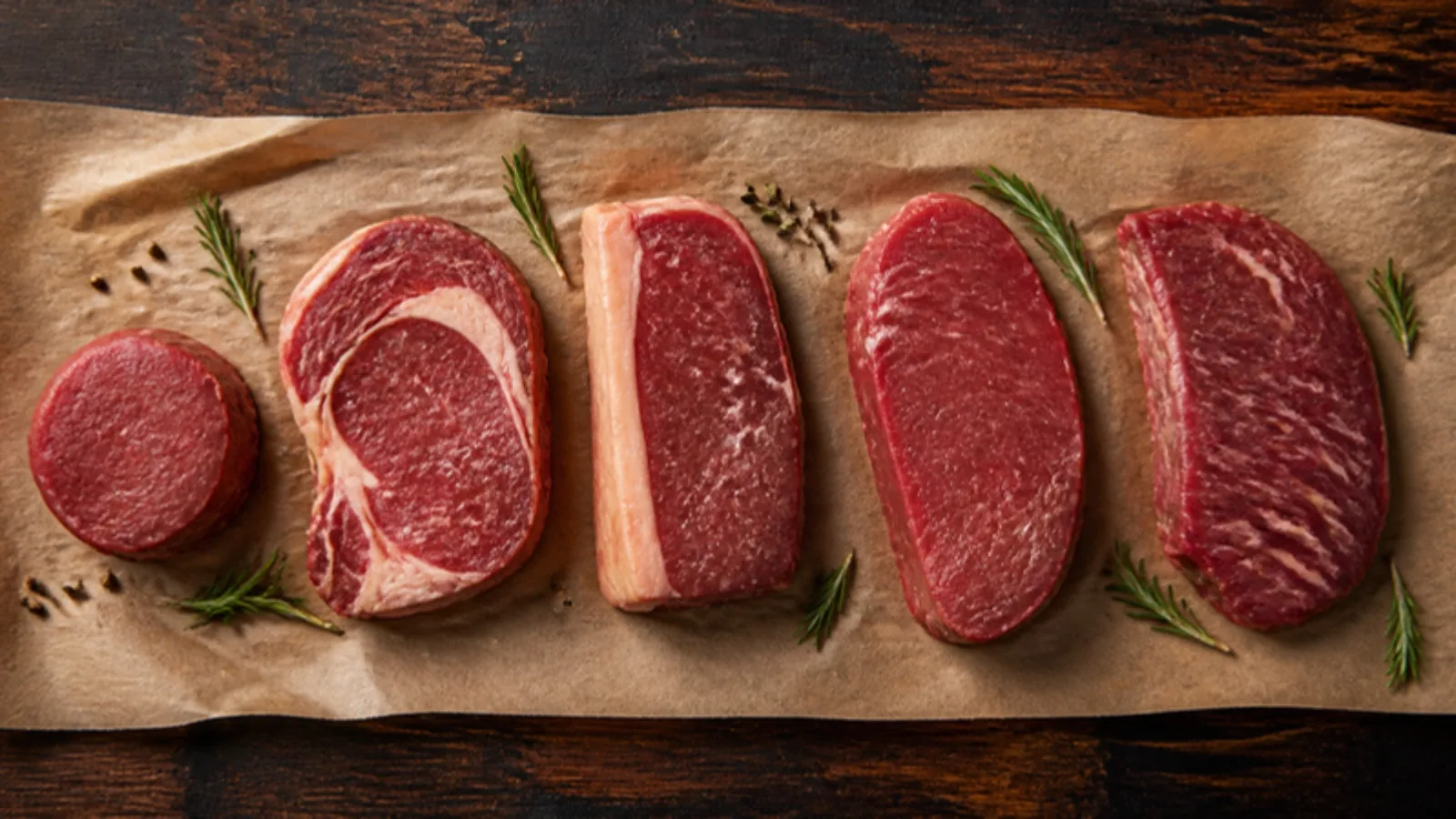
Dry-ageing works best on the big, prime cuts with a good covering of fat: the rib (ribeye, côte de boeuf), sirloin and rump. Fillet is rarely aged for long, as it's already tender and has little fat to protect it.
How to cook dry-aged steak
Simply. With so much flavour, it needs little more than salt, a very hot pan and a good rest. Dry-aged beef has less moisture, so it browns faster: keep an eye on it. Our guide to cooking the perfect steak has the timings.
Is it worth it?
For a special steak or a celebration roast like a rib of beef at Christmas, we think so. Taste dry-aged and standard beef side by side and the difference is clear.
Ask us how long our beef has been matured, and browse our steaks and joints.