A great steak isn't complicated. It's a good piece of meat, a very hot pan, and a few minutes of patience at the end. Here's how we cook ours.
1. Start with the right steak
- Ribeye: marbled with fat, juicy and full of flavour. The most forgiving steak to cook.
- Sirloin: a classic, with a strip of fat along one side. Leaner than ribeye and slightly firmer.
- Fillet: the most tender, and the most expensive. Mild in flavour, so best kept rare to medium-rare.
- Rump: big beefy flavour and great value, with a little more chew.
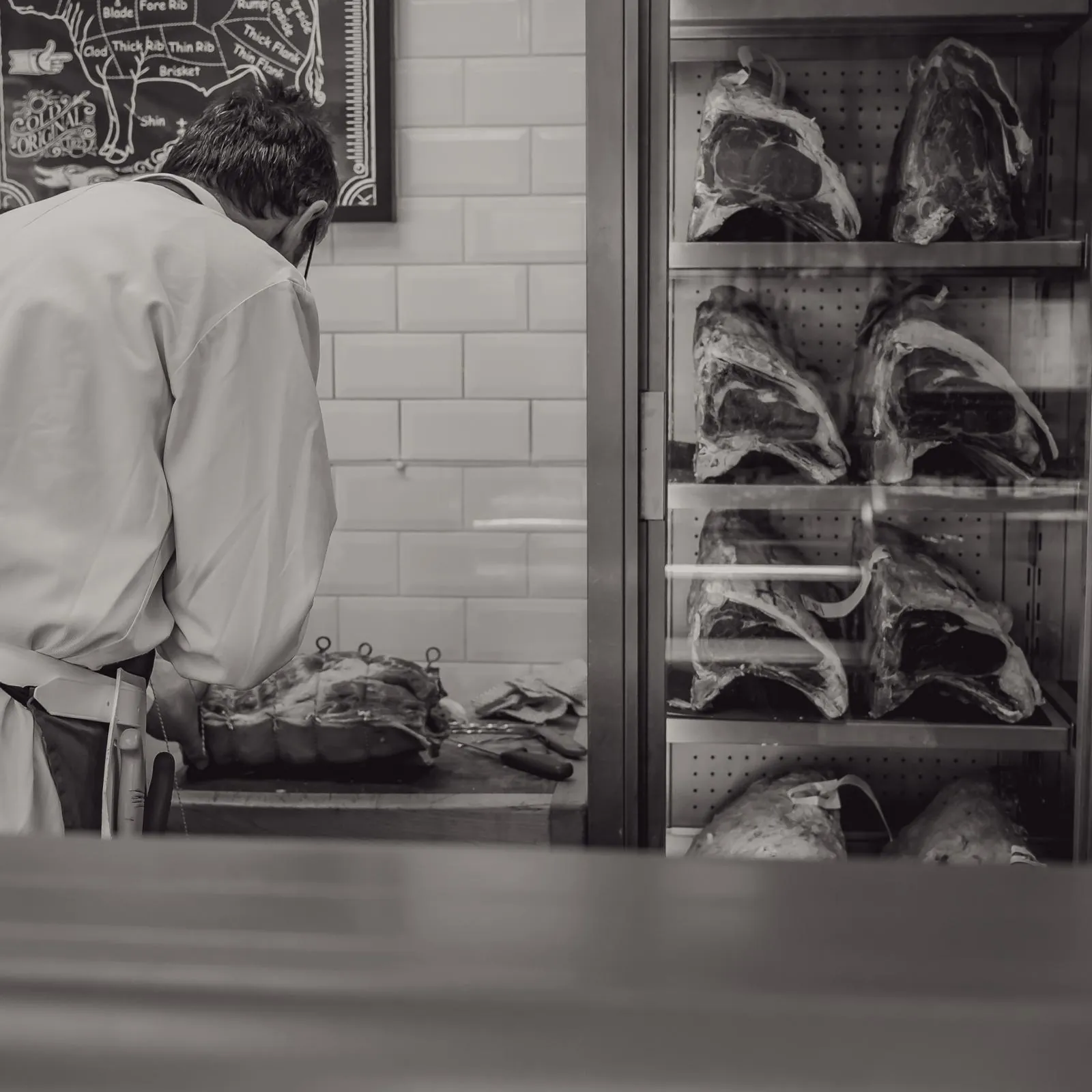
Not sure which to choose? See our guide to steak cuts explained. Thickness matters too: about 2.5–3cm gives you a well-browned outside without overcooking the middle. Ask us and we'll cut it to the thickness you want.
2. Get it ready
- Take it out of the fridge 20–30 minutes before cooking, so it cooks more evenly.
- Pat it dry with kitchen paper. A dry surface browns; a wet one steams.
- Season generously with salt just before cooking. Pepper can go on now or at the end.
3. Get the pan very hot
Use a heavy frying pan or griddle, ideally cast iron, and heat it until it's smoking hot. Rub a little oil on the steak rather than pouring it in the pan.
4. Cook it
Lay the steak away from you in the pan and leave it alone. Turn it every minute or so for an even crust, or once halfway. For a 2.5cm steak, as a guide:
| How you like it | Each side | Inside temperature |
|---|---|---|
| Blue | 1 min | under 45°C |
| Rare | 1½–2 mins | about 50°C |
| Medium-rare | 2–2½ mins | about 55°C |
| Medium | 3 mins | about 60°C |
| Well done | 4–5 mins | 70°C and above |
Thicker steaks take longer, so a meat thermometer is the most reliable guide. The temperature rises another degree or two while it rests.
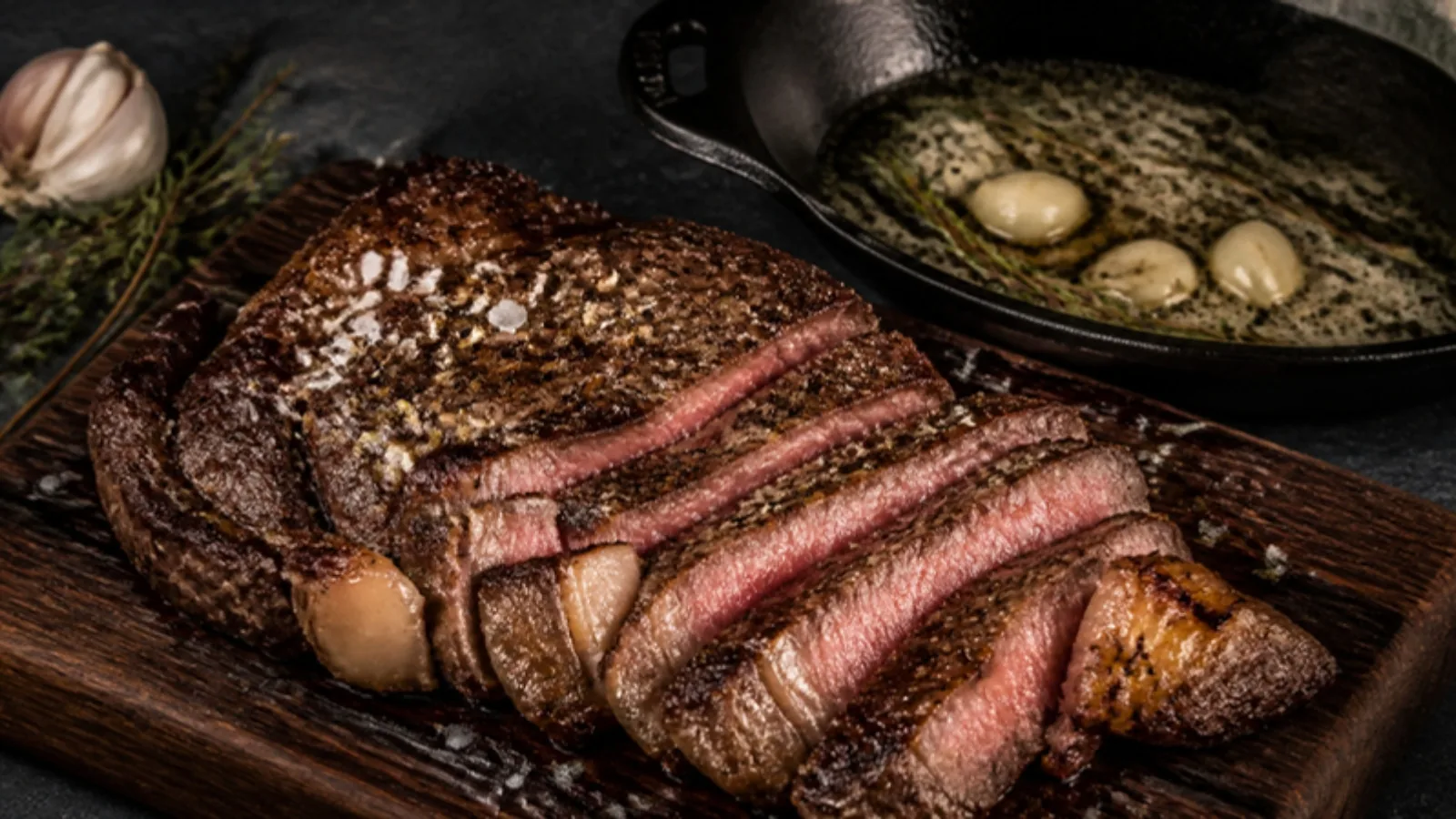
For extra flavour: in the last minute, add a knob of butter, a crushed garlic clove and a sprig of thyme or rosemary, and spoon the foaming butter over the steak.
Got a fat cap? On sirloin or a thick ribeye, hold the steak on its side with tongs for a minute first to render and crisp the fat.
5. Rest it
This is the step most people skip. Move the steak to a warm plate and rest it for about half its cooking time, at least 3–5 minutes. The juices settle back into the meat instead of running all over the board.
6. Slice against the grain
Look for the lines running through the meat and cut across them. It makes every slice more tender, especially for rump and other harder-working cuts.
Common mistakes
- A pan that isn't hot enough: the steak goes grey instead of brown.
- Too many steaks at once: the pan cools down. Cook in batches.
- Prodding and moving it: leave it alone to build a crust.
- Cutting it straight away: the juices end up on the board instead of in the steak.
Get your steaks from Mr & Mrs Park's
Properly matured, cut to the thickness you like. Browse our steaks and order for click & collect. Curious about matured beef? Read what dry-aged beef really means.